

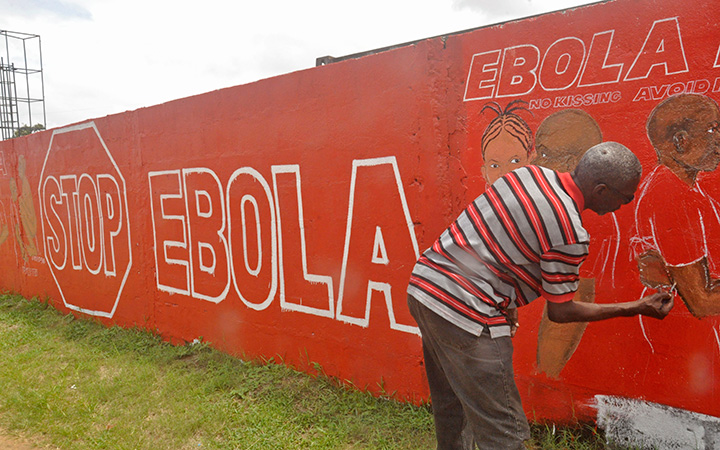
A report released by BudgIT Nigeria has revealed how Nigerian health officials mismanaged a sum N1.9b Ebola emergency relief fund.
It will be recalled that the deadly virus broke out last year in some countries in the West African region, including Nigeria. Subsequently, Federal Government, corporate bodies and other international donor agencies donated billions to fight the disease,
At a public presentation of the Ebola Fund Watch report yesterday in Lagos, Biola Afolabi, a Project Cordinator at BudgIT Nigeria, a fiscal probity advocacy outfit which conducted investigations into how funds donated to battle the dreaded infectious disease were spent revealed shady handling of monies meant for Ebola scourge.
Afolabi said that the investigation which was conducted with support of Open Society Initiative for West Africa (OSIWA) focused on countries in the West African sub region ravaged by the Ebola scourge. The countries are Nigeria, Liberia, Sierra Leone and Guinea.
On how Nigerian officials cornered sizeable chunk of the relief fund, the report reveals,
“In Nigeria, there is the existing N1.9 billion alleged fraud and mismanagement by the officials of the Federal Ministry of Health.
“Reports speak of bogus allocations were made: a sum of N250, 000 was allocated as local running per kilometer for one of the officials; an additional N216, 000 was allocated for airfare for a meeting that held in Nigeria as well as a sitting allowance of N375, 000.
The report also revealed the mismanagement of Ebola relief funds in Liberia and Sierra Leone.
It adds,“All the affected focus countries experienced some mismanagement in the funds committed to containing the Ebola Virus Disease. For example, The General Auditing Commission of Liberia highlighted major discrepancies; financial irregularities and material control deficiencies in the audit report on Ebola Funds.
“Some vehicles donated to contain the outbreak were unaccounted for and were later seen carrying passengers for commercial purpose.
“In Sierra Leone, the report shows a shortage of ambulances to pick the sick, although the Government of Sierra Leone established a Health Emergency Account to receive all donations, evidence from the Audit Service Sierra Leone shows mismanagement, of over $11 million without supporting documents”.
Afolabi, described the report as a “ground-truthing approach”, a diverse survey plan, which according to her includes interviews with various stakeholders- caregivers, journalists, survivors, victims’ dependants, civil servants and others.
She added “Testimonies gathered from major stakeholders constitute the blueprint of this report, which will hopefully serve as a basis to conduct investigations into public institutions. At BudgIT, we believe citizens should have access to the data to track the disbursement of the relief funds.”
“We will send aggregate feedback of this report to some relevant government institutions, to guide policy reforms around health and epidemic issues in Nigeria.”Afolabi says.
Speaking on the objective of the investigative study, BudgIT affirmed that it will help stimulate discussions around the judicious implementation of Ebola relief funds and where relevant, kick-start and strengthen deliberations about the building a more responsive health system for the region and tangibly contribute to a broader understanding of preparedness for future outbreaks.
Oluseun Onigbinde, Lead Partner of BudgIT, who decried the mismanagement of the crucial funds across affected countries said “It has reflected that there is a common thread of profligacy when it comes to emergency funding”.
In his submission, Joseph Amenaghawon, Program Coordinator, Economic Governance, OSIWA said “The EbolaFundWatch- Tracking Funds For Ebola Crisis in West Africa Regional Report echoes over and over again the need for the sub-region and its constituent countries to prioritize public health management as a critical human safety and security issue.”
According to him, democratic governance bears no fruits neither will it positively impact the lives of the region’s peoples if there is no responsible use of public resources to meet the basic needs of citizens. We also do ourselves more harm when mobilized funds from within and outside the region to deal with emergency region wide challenges such as EVD are poorly utilized or are frittered away as a result of corruption.
“It is important that accountability deficits identified by the report are duly followed up towards ensuring that all beneficiaries of such are duly investigated. We are hopeful that the key recommendations of the report resonates with targeted key institutions of government and serves as trigger for better organizing of the key sectors such as health in the sub-region” Amenaghawon said.
